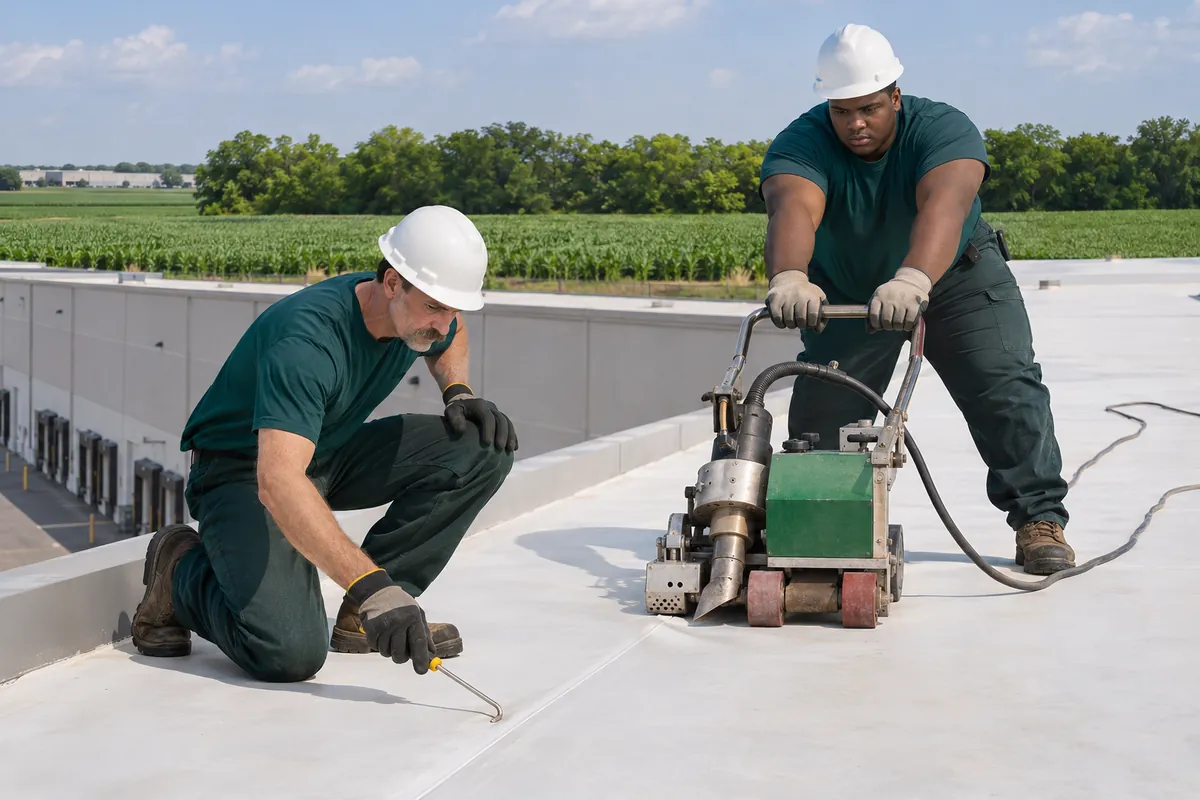
TPO Roofing
Heat-welded white sheet for low-slope offices and retail additions beside metal buildings.
TPO roofing in Noblesville
Noblesville commercial metal roofing from us means standing-seam and exposed-fastener panels on shops, warehouses, and farm buildings, matched to the framing and sealed at every lap.
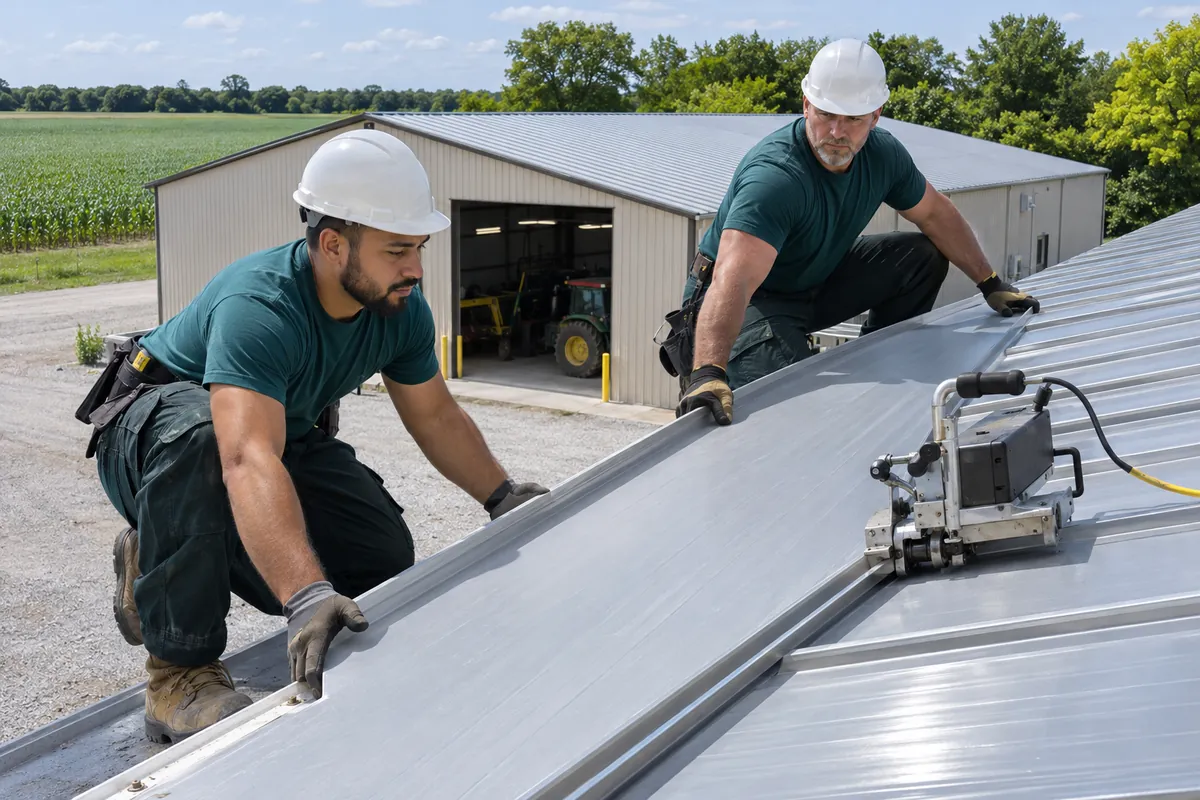
Noblesville commercial metal roofing suits sloped steel framing and pole buildings, and it can go over some older roofs. These lists show where it fits and what we check first.
Metal roofs give clear warnings at fasteners, laps, and trim. These pairs show what owners see first and what we look for on the panels.
Drips that line up in rows across the building follow fastener lines where washers have dried out and cracked.
Screws that loosen with heat and cold leave open holes around the shank, and water follows them straight in.
Orange spots on a liner panel or insulation facing mark where water has dripped long enough to rust the panel above.
Side laps, end laps, and cut edges hold moisture and rust first, then the steel thins until it opens.
Ice building at the eave, with drips inside the wall line, points to warm air leaking up and melting snow on the panels.
Snow sliding off panels can tear gutters loose where there are no snow guards or the gutter straps are light.
A roof that rattles or booms in wind has loose panels or trim, and the noise starts before the leaks do.
Ridge caps and rake trim that lift in storms let wind-driven rain past the closures and onto the framing.
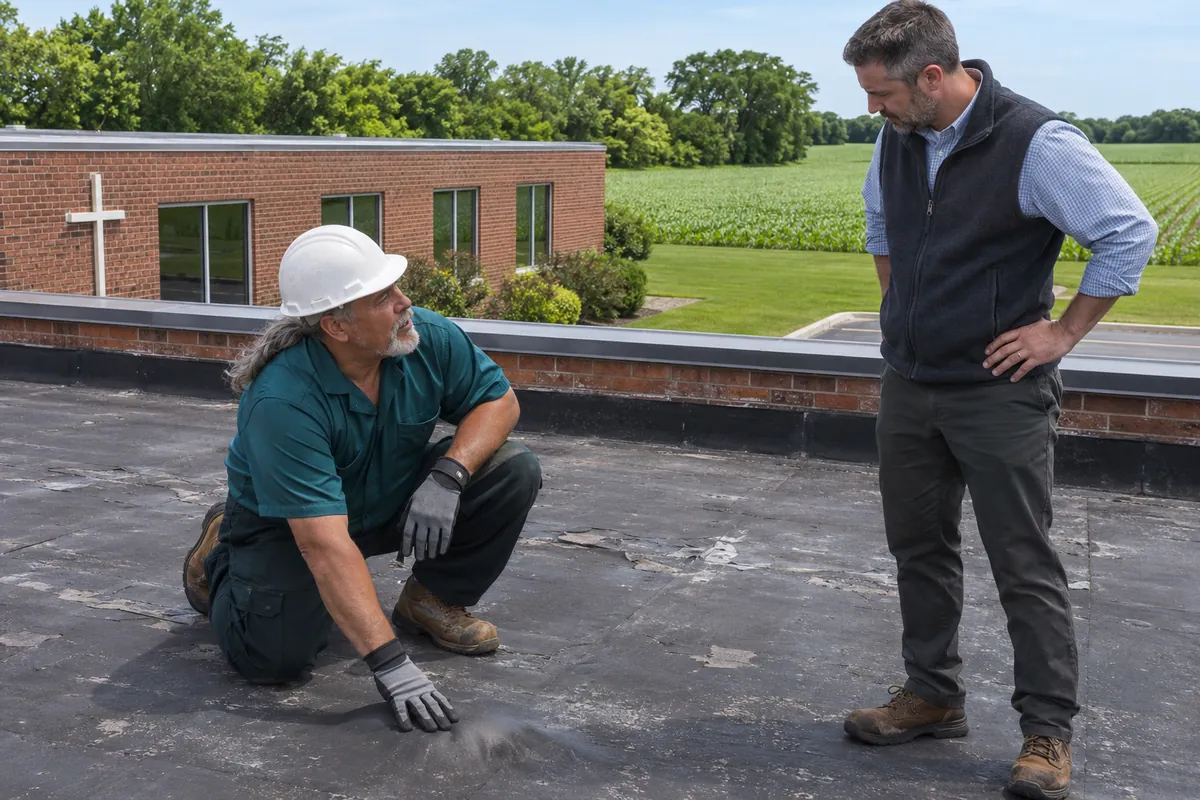
Every metal job starts with the framing. We check purlin spacing and condition, then choose panel profile, gauge, and fastening to match.
Over an existing roof, a framing or purlin system goes on first, as long as the structure can carry the load and the old roof is dry. Local rules on roof layers apply, so we count them before recommending it.
Send the building size and what the roof is now. We check the framing, count layers, and price panels, trim, and insulation in one written scope.
Get A Free EstimateMany metal roofs need only fastener and trim work. Others have rusted through at the laps, and these rows show where that line falls.
| Roof Factor | Repair The Metal Roof | New Metal Roof |
|---|---|---|
| Fasteners | Washers cracked, with holes still tight | Holes wallowed out across the roof |
| Rust | Surface rust at a few laps | Rust through at laps and cut edges |
| Panels | Flat and attached | Bent, loose, or missing after wind |
| Framing | Purlins straight and dry | Purlins rusted or sagging |
| Trim | A few loose ridge or rake pieces | Trim failing around most of the building |
Farm and shop buildings often stay in use during the work. These steps keep equipment moving in and out while panels go on.
We measure purlin spacing, look for rust or sag, and core any old roof that the new panels will cover.
Profile, gauge, finish, and fastener type are chosen for the framing, slope, and how the building is used.
Bundles and trim are staged where tractors and trucks can still pass, and work near doors is timed with you.
Panels go on with closures at eaves and ridges, and standing seams are run with a power seamer.
Trim, flashing, and snow guards go on last, then we walk the roof with you and check every fastener line.
Flat sections and low-slope additions need membrane instead of panels. These are the systems we use there.
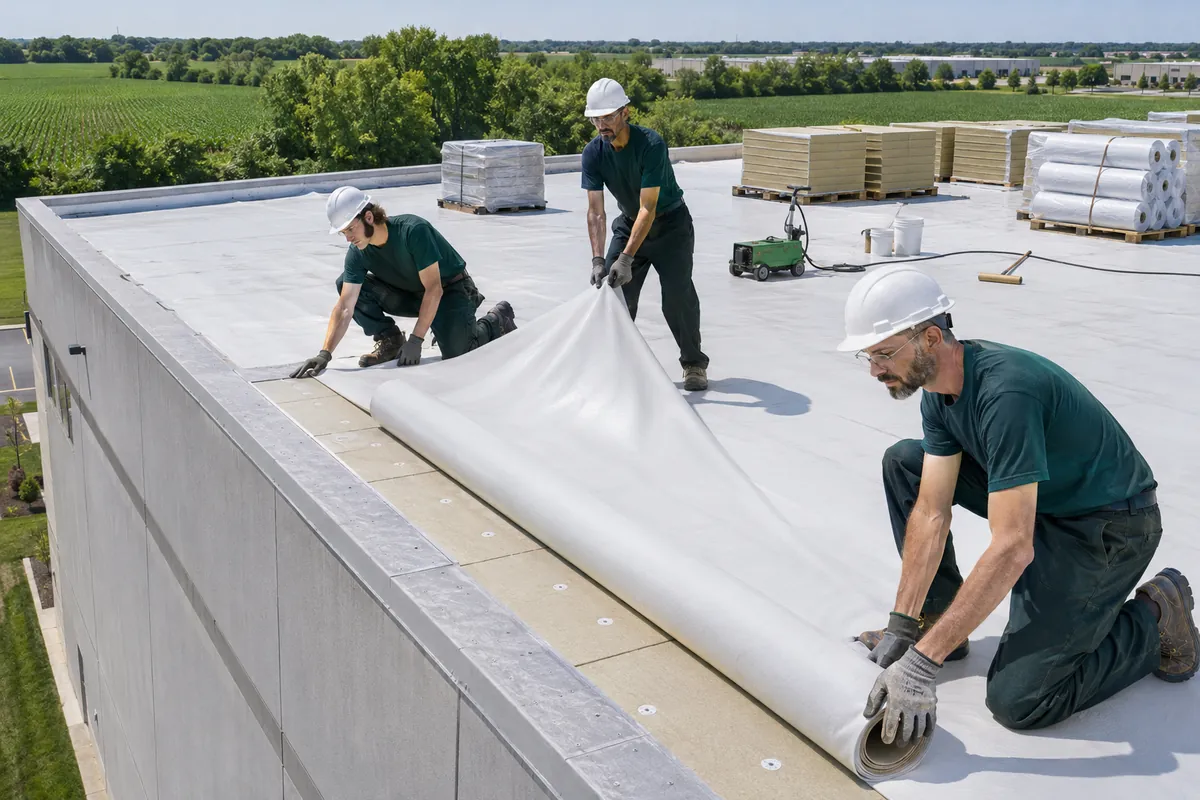
Heat-welded white sheet for low-slope offices and retail additions beside metal buildings.
TPO roofing in Noblesville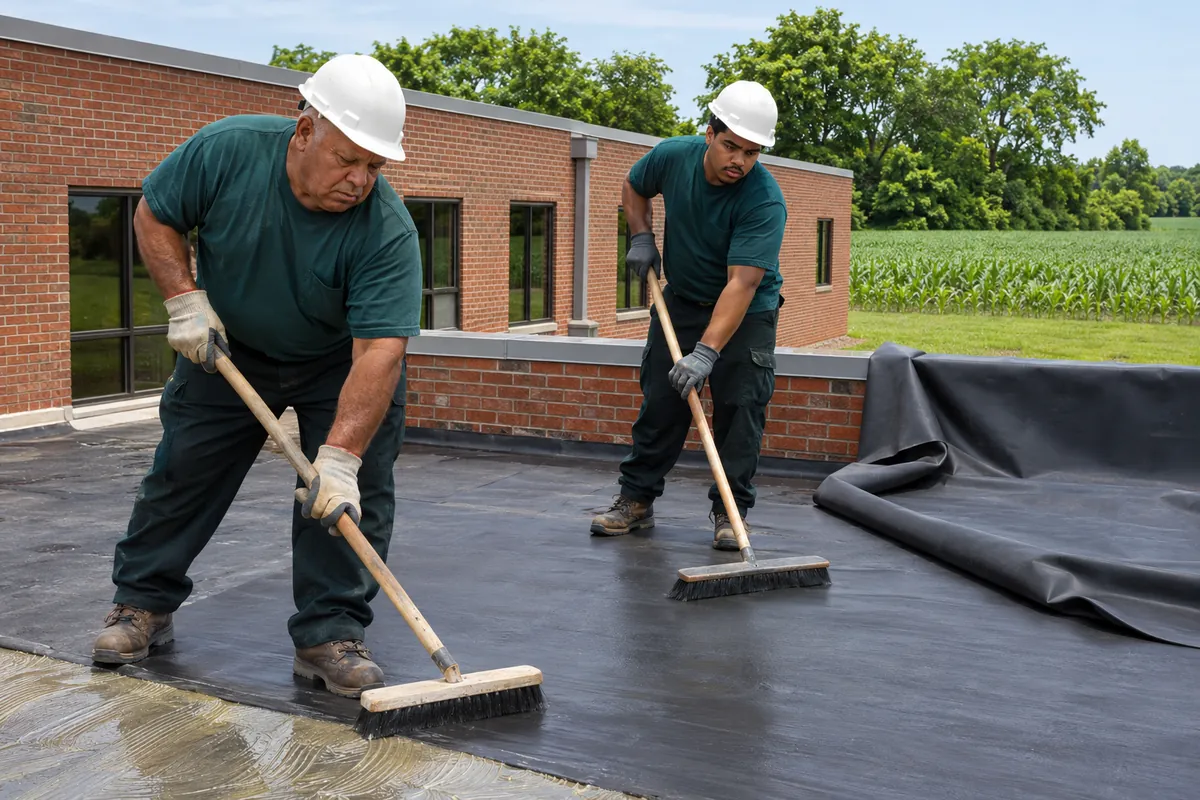
Rubber membrane with taped laps for flat roofs that see heavy foot traffic.
EPDM roofing in Noblesville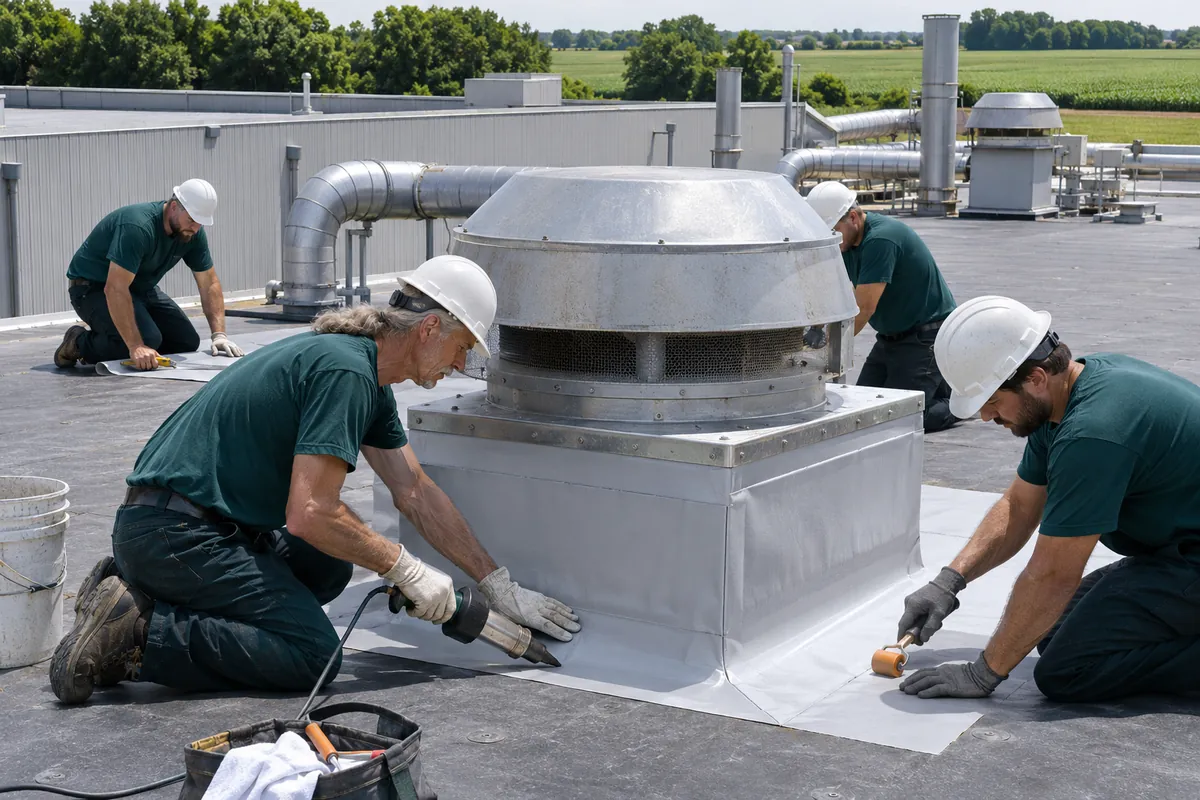
Plant roofs that mix membrane and metal around exhaust and ductwork.
Industrial roofing in NoblesvillePick a question to read the answer. These cover panels, costs, and older roofs.
Yes. Machine sheds, barns, and storage buildings around Noblesville are a common fit for metal. Panels span purlins without a solid deck, shed snow and rain, and hold up to farm use. We install exposed-fastener or standing-seam panels matched to the framing and to how the building is ventilated.
Often it can. A framing or purlin system lets panels go over the existing roof when the structure carries the extra load and the old roof is dry enough that moisture stays out. Local rules on roof layers apply, so we check the layers and the structure first.
Panel type comes first: exposed-fastener or standing seam. Then gauge and finish, slope and size, trim and flashing details, insulation, and whether old roofing comes off. Each roof gets priced through a free on-site estimate.
Gauge, finish, fastener type, ventilation, and upkeep decide it. Exposed-fastener roofs need fastener checks as washers age, while standing-seam roofs have fewer fasteners in the weather. Clear gutters and quick fixes to scratches and loose trim help the steel last.
That is usually condensation. Warm, damp air inside meets cold steel and turns to water, which drips like a leak. A vapor barrier, faced insulation, or better ventilation fixes it, and we check which one the building lacks before quoting a new roof.
Over doors, walkways, and gutters, yes. Snow lets go from metal panels in one slide, and guards hold it in place so it melts off slowly. We place them in rows above the areas people and equipment use.
Send the building size and current roof. We check the framing and old layers, then price panels, trim, and snow guards in one scope.