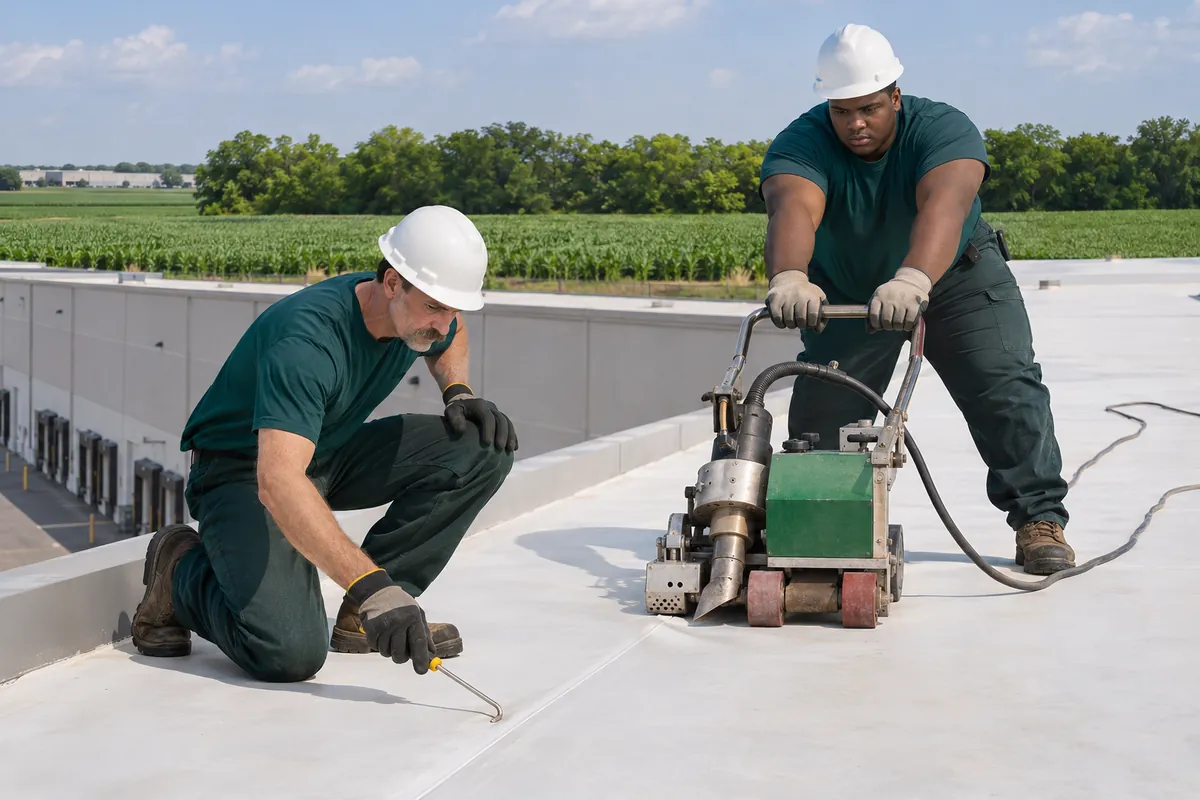
TPO Roofing
Heat-welded white sheet for retail and office roofs where summer cooling loads run high.
TPO roofing in Noblesville
Noblesville EPDM roofing from us means black rubber sheet in wide rolls, fully adhered or ballasted, over new insulation on church halls, offices, and shops.
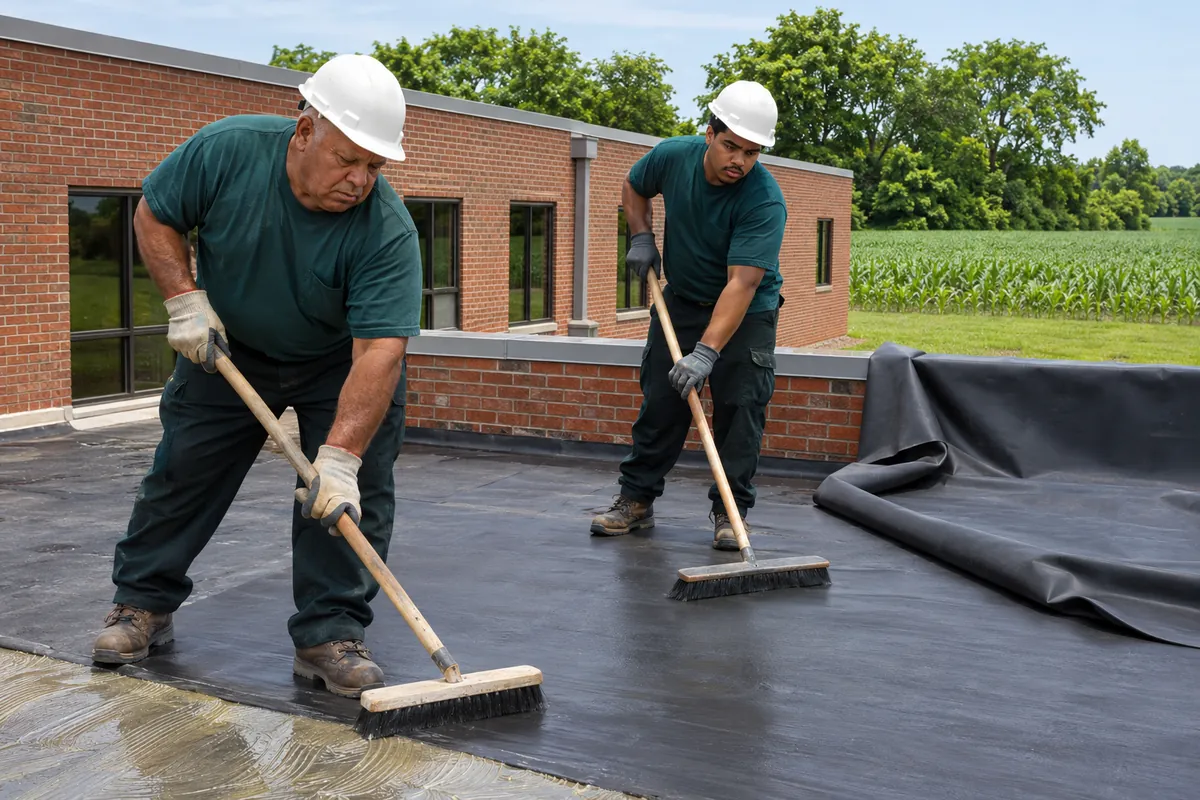
Noblesville EPDM roofing suits low-slope buildings with foot traffic, odd shapes, or hard winters. A few roof conditions call for a different plan, listed on the right.
Rubber roofs age in plain view once you know where to look. Pair each clue inside the building with the roof detail behind it.
Corner stains often mean the membrane has shrunk and pulled the flashing off the wall, opening a gap at the edge.
Shrinking rubber tents up at the parapet and edge metal, and the stretched sheet splits or lifts the termination bar.
Water around a skylight frame or roof hatch usually starts at a curb flashing seam that has dried out and opened.
Lap edges that curl up or show bare primer mean the seam tape has let go, and water tracks under the field sheet.
Leaks that start a day or two after snow settles on the roof point to slow meltwater finding an open lap.
Stone that wind has swept into piles leaves bare membrane exposed to sun and uplift in the cleared spots.
A damp smell in the highest rooms comes from insulation that has soaked up water through a hole nobody has found yet.
Surface cracks deep enough to catch a fingernail show rubber near the end of its service on that roof.
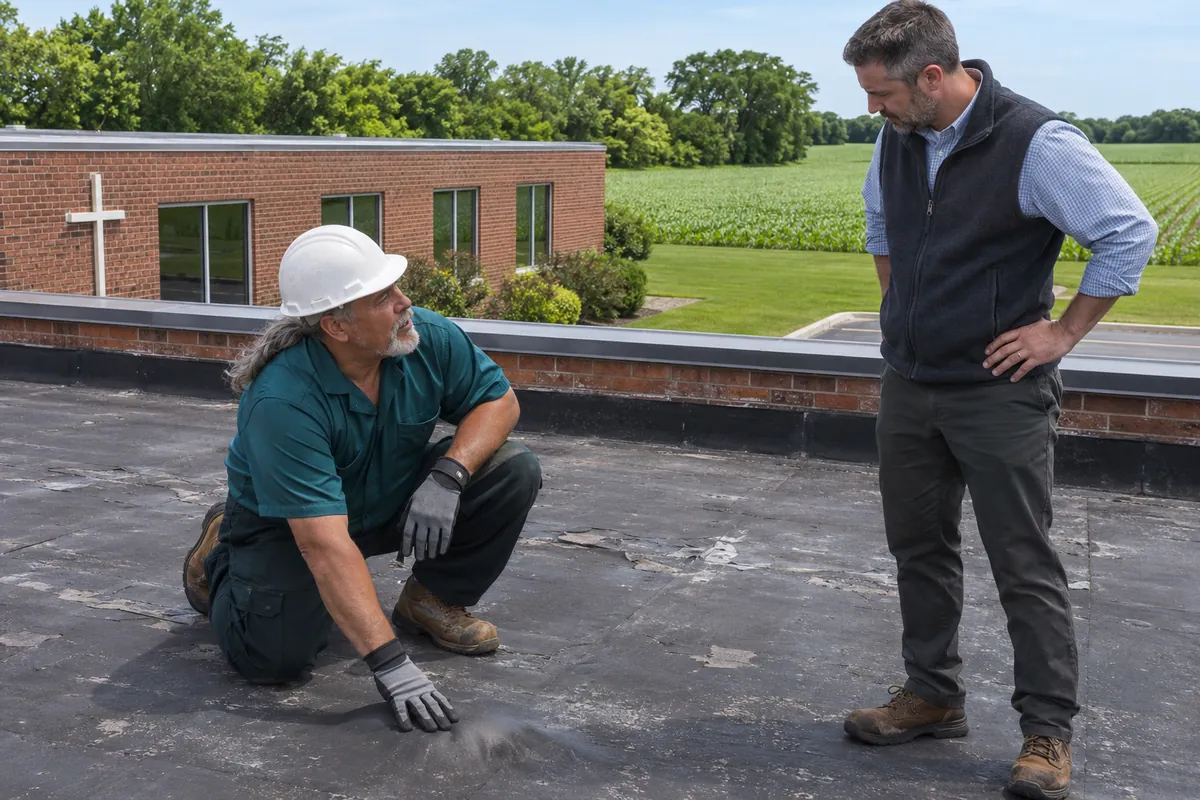
The old roof comes off down to the deck, unless core cuts show one dry layer that can stay under a cover board. New insulation is fastened, and the rubber goes down in the widest rolls the roof allows.
Adhered sheet gets bonding adhesive on both faces. Laps are primed and joined with seam tape, then rolled so the tape grips its full width.
Bids line up better when they start from the same facts. We cut cores, count layers, and note every curb and skylight before writing ours.
Get A Free EstimateA rubber roof often takes a few repairs well. Once shrinkage and wet insulation spread, a new EPDM system is the cleaner fix.
| Roof Factor | Repair The Existing EPDM | New EPDM Roof |
|---|---|---|
| Shrinkage | Membrane lies flat at walls and edges | Sheet tented at parapets and pulling at corners |
| Seams | One or two laps lifting | Tape failing on laps across the field |
| Insulation | Dry at the core cuts | Wet across large sections of the roof |
| Surface | Flexible rubber with light wear | Cracking deep enough to catch a fingernail |
| Ballast | Stone evenly spread | Bare patches and piles after wind |
Church and community buildings run on a weekly calendar. This work order keeps services and events on schedule while the new roof goes on.
Core cuts show how many roofs sit on the deck, whether the insulation is dry, and what holds the current rubber down.
Roof days skip service times and big events, and the dumpster sits away from main entrances and parking.
Each section goes to the deck, gets checked, and receives new insulation before the end of the day it opens.
Rubber goes down in wide rolls, laps are primed and taped, and walls get flashing tied in with termination bar.
We roll and check every lap, then walk the roof with whoever manages the building.
EPDM fits many roofs in town, and some buildings do better with another system.
Heat-welded white sheet for retail and office roofs where summer cooling loads run high.
TPO roofing in Noblesville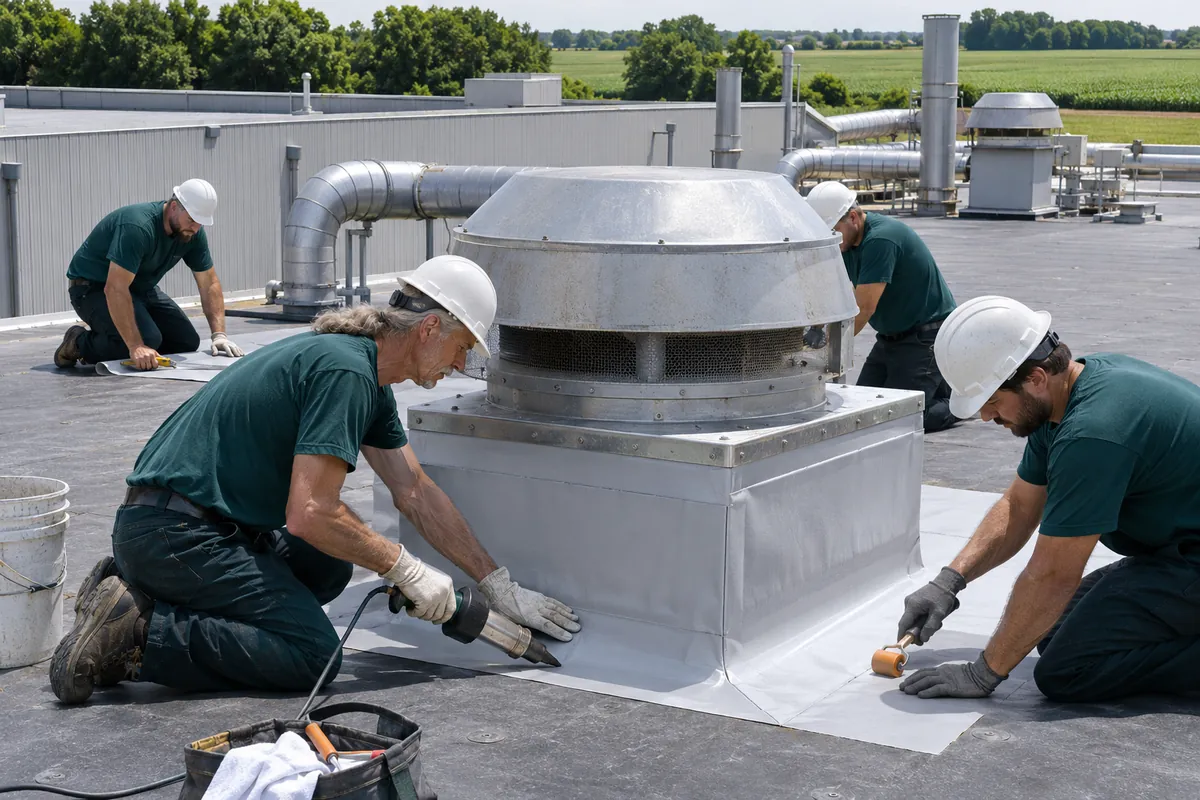
Roofs over production lines, planned around exhaust, chemicals, and shift changes.
Industrial roofing in Noblesville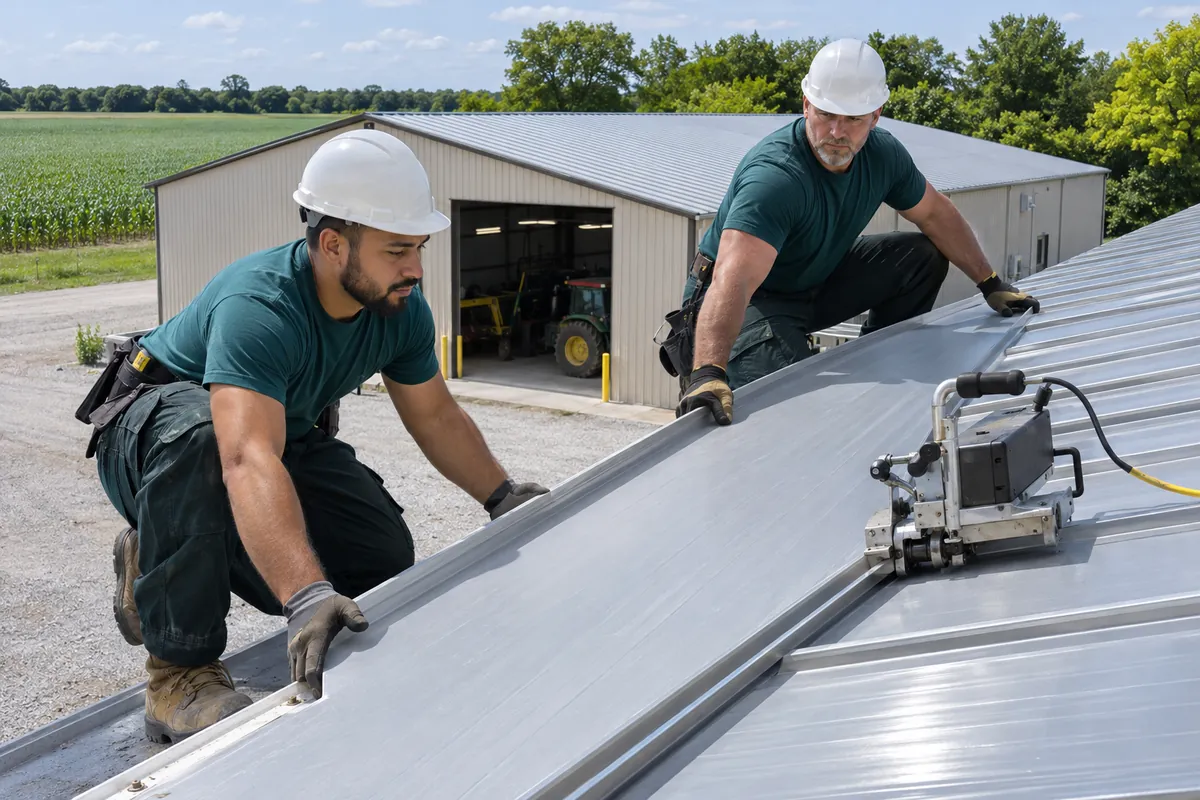
Standing-seam and exposed-fastener panels on sloped steel framing and pole buildings.
Commercial metal roofing in NoblesvilleOwners ask these on nearly every rubber roof we walk. Pick a question to see the answer.
EPDM is synthetic rubber, usually black, made for low-slope commercial roofs. It comes in big sheets, so a roof has few seams, and those seams are joined with primer and seam tape. The rubber stays flexible when temperatures drop and stands up well to hail and foot traffic.
Adhered EPDM is glued to the insulation, leaving a smooth surface that handles equipment, foot traffic, and wind. Ballasted EPDM is held down with stone, which adds weight the structure has to carry and makes leaks harder to trace. We check the deck's load capacity and how the roof gets used before picking one.
Replacement makes sense once the sheet has shrunk away from the edges, seams keep reopening, the surface is cracked, or wet insulation covers big areas. With smaller damage, repairs or replacing one section can work. A moisture survey and a seam check tell us which way to go.
Size and shape of the roof, membrane thickness, and whether the sheet is adhered or ballasted come first. Insulation, tear-off, and detail work at walls, skylights, and equipment add to it, and so does access around entrances and landscaping. A free on-site estimate sets the price.
Often, if the field sheet is still flexible. We clean the lap, prime it, and apply new seam tape or a cover strip over the old seam. When laps fail across the whole roof, patching turns into a cycle, and a new sheet is the better use of the budget.
White EPDM exists, and it reflects more sun than black rubber. On buildings where cooling load drives the choice, we also price TPO, since a white surface and welded seams come standard with it. The estimate lays both options side by side.
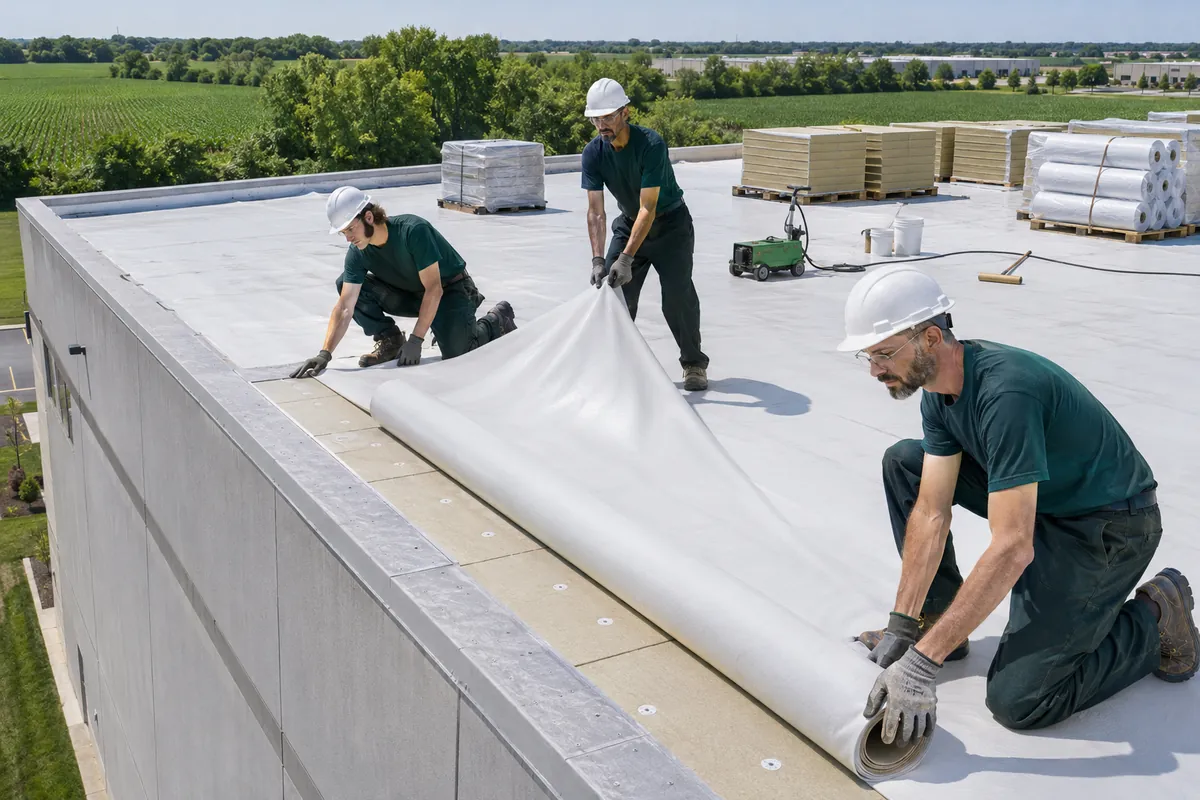
Tell us where the rubber roof leaks and how old it is. We core it, count the layers, and price repair and replacement side by side.