EPDM Roofing
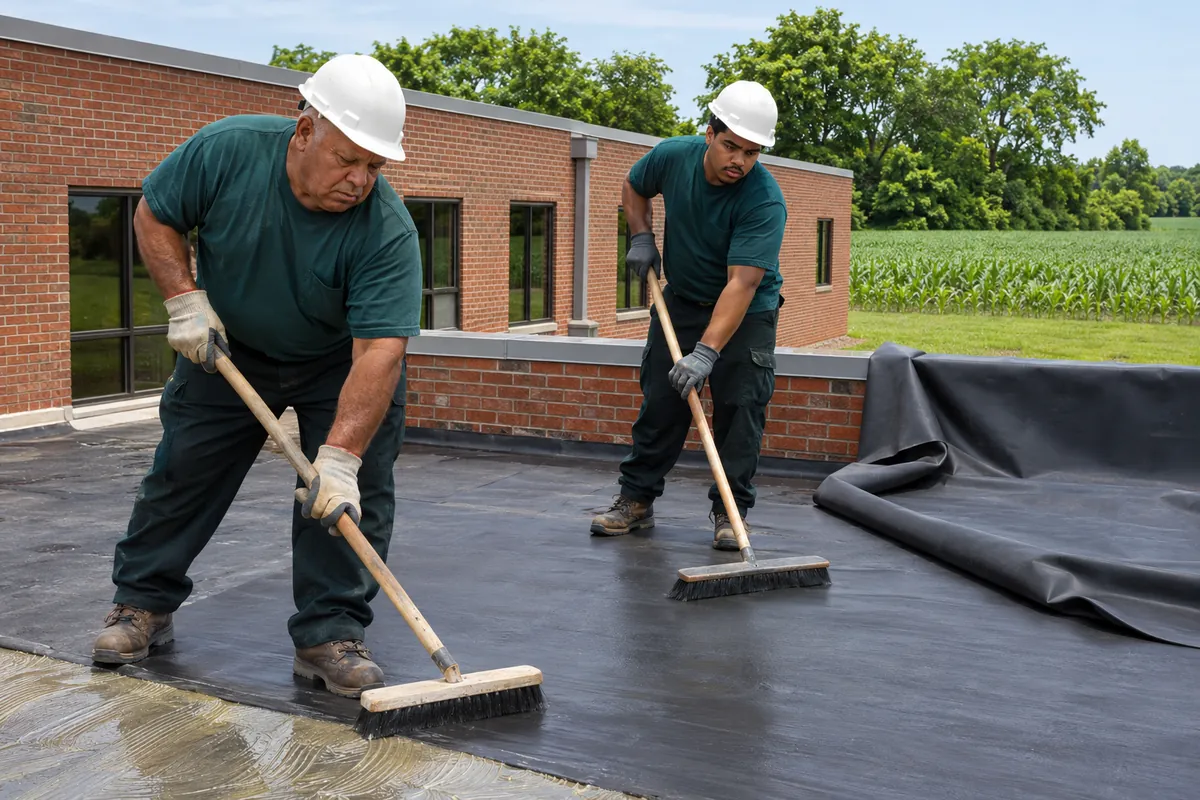
Rubber sheet with taped seams, a strong match for roofs with heavy foot traffic or odd shapes around additions.
EPDM roofing in Noblesville
As a Noblesville TPO roofing contractor, we tear off worn low-slope roofs and install white, heat-welded TPO over new insulation on retail, office, and light industrial buildings.
Noblesville TPO roofing fits most low-slope commercial buildings, though a few roof conditions change the plan. This is how we sort them on the first walk.
A worn low-slope roof gives warnings inside and up on the deck. These pairs show what to look for before a small leak soaks the insulation.
Stains that line up with an outside wall often start where the membrane meets the parapet and the base flashing has pulled loose.
Old flashing that slumps off the wall leaves an open gap at its top edge, and wind-driven rain runs right in.
Offices on the highest floor that heat up every afternoon sit under a dark or chalked roof surface soaking up sun.
Fine surface cracks and powder that comes off on your hand mean the sheet is near the end of its service on that roof.
Leaks that show up only with storms from one direction point at laps on that side of the roof, or at a corner.
A probe that slides into a lap shows a weld or adhesive that has let go, and those runs need new sheet.
Ceiling panels that bow or smell musty sit under insulation that has soaked up water over several seasons.
Dirt rings around a drain show where water collects because the insulation is crushed or the drain sits high.
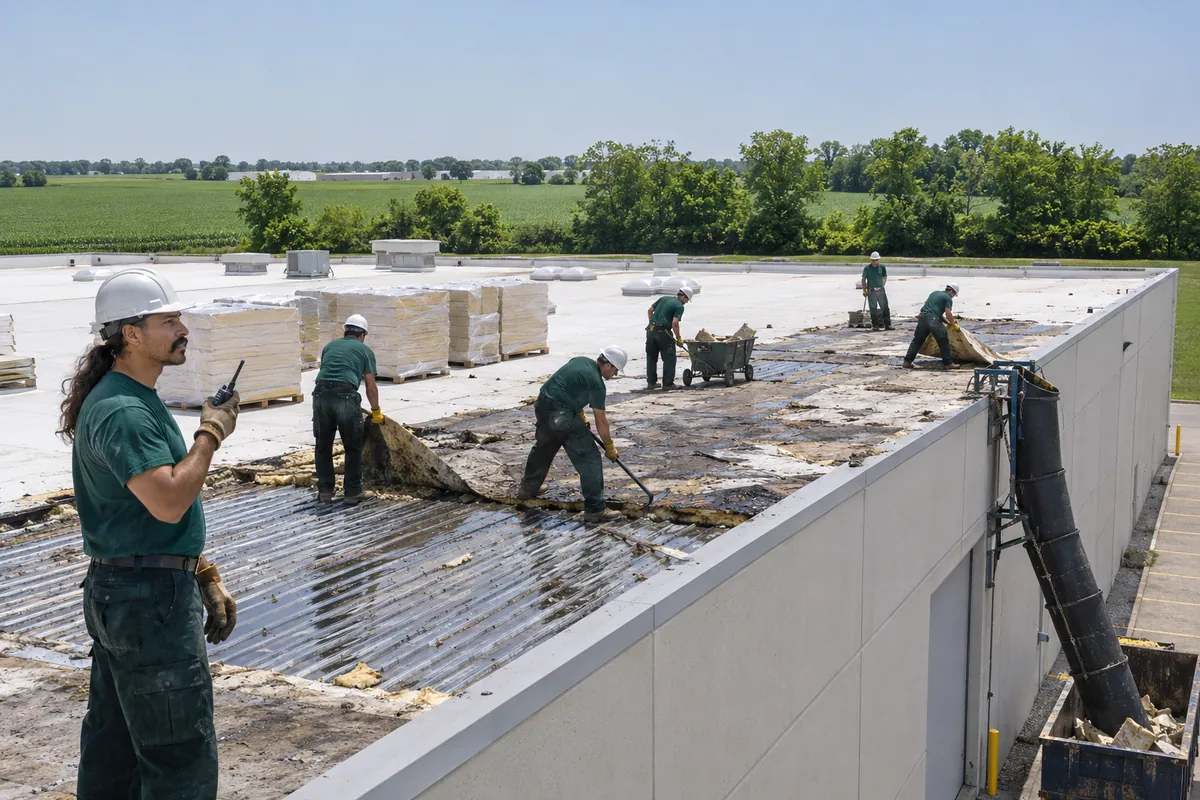
Every TPO job starts at the deck. Old layers come off section by section, the deck gets checked and refastened, and new insulation goes down with a cover board on top.
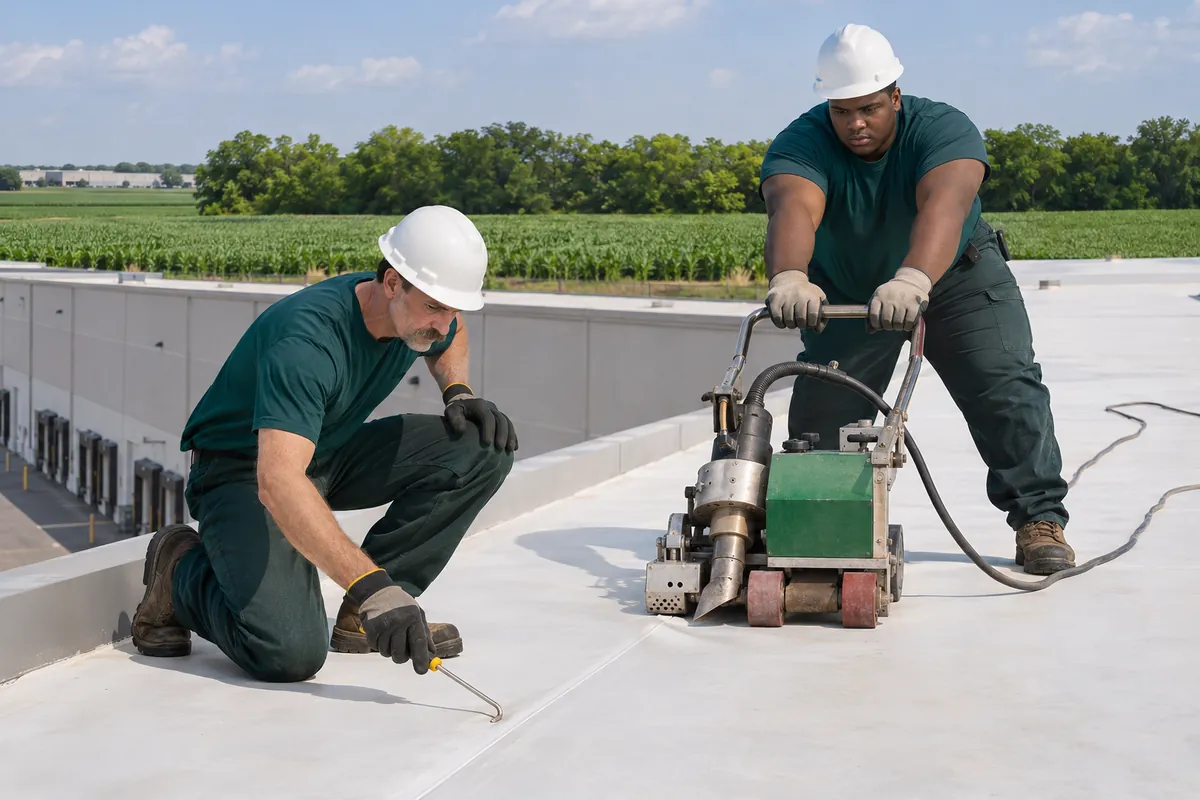
Sheets are fastened or adhered, then the laps are welded with hot air. Each morning a test weld dials in heat and speed for that day's temperature.
Send the address and a note on leaks or roof age. We core the roof first, so the quote covers insulation and deck work along with the membrane.
Get A Free EstimateSome low-slope roofs have years left after a few repairs, and others are past it. These rows show how we make that call on a TPO job.
| Roof Factor | Repair The Existing Roof | New TPO Roof |
|---|---|---|
| Seams | A few loose laps in one area | Laps failing along many runs |
| Insulation | Core cuts come back dry | Wet board under large sections |
| Surface | Membrane flexible, with no deep cracking | Chalked, crazed, or shrinking sheet |
| Flashings | Base flashing loose at one or two curbs | Flashing failing around most of the perimeter |
| Owner Plans | A short-term fix ahead of a sale or lease change | Keeping the building and wanting a new system |
On a retail roof, work runs around store hours and customer parking. These five steps take the job from first walk to final seam check.
Cores, seam probes, and a drain check tell us what is under the membrane and how much of the roof needs tear-off.
Sections are lined up with store hours, so deliveries and parking stay clear of the hoist and dumpster.
Each section comes down to the deck, gets refastened, and receives tapered insulation and a cover board before any sheet goes on.
Rolls are fastened or adhered, and a robotic welder runs the long laps while hand welders finish corners and curbs.
Every seam is probed, flashings get a last look, and you walk the roof with us before the job closes out.
TPO covers most low-slope roofs in town. These systems take over when the building calls for something else.
Rubber sheet with taped seams, a strong match for roofs with heavy foot traffic or odd shapes around additions.
EPDM roofing in Noblesville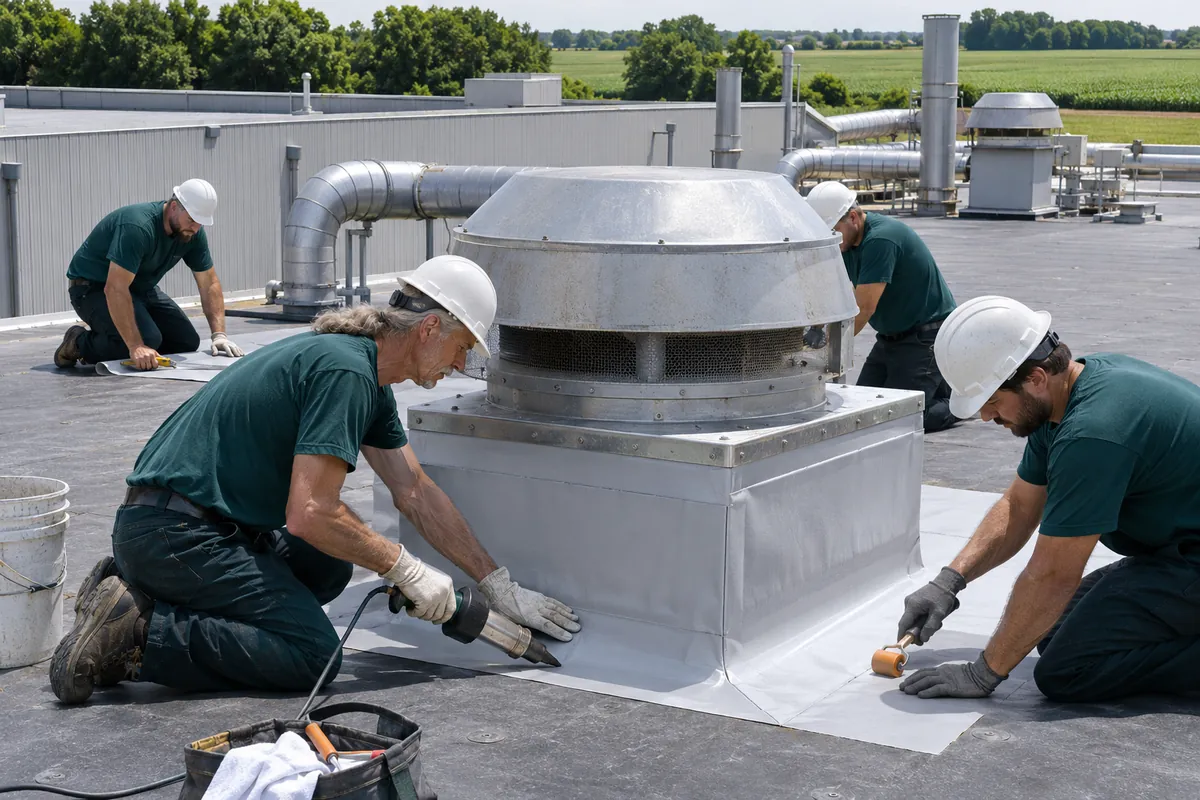
Plant roofs with exhaust fans and ductwork, phased around shifts and the production lines below.
Industrial roofing in Noblesville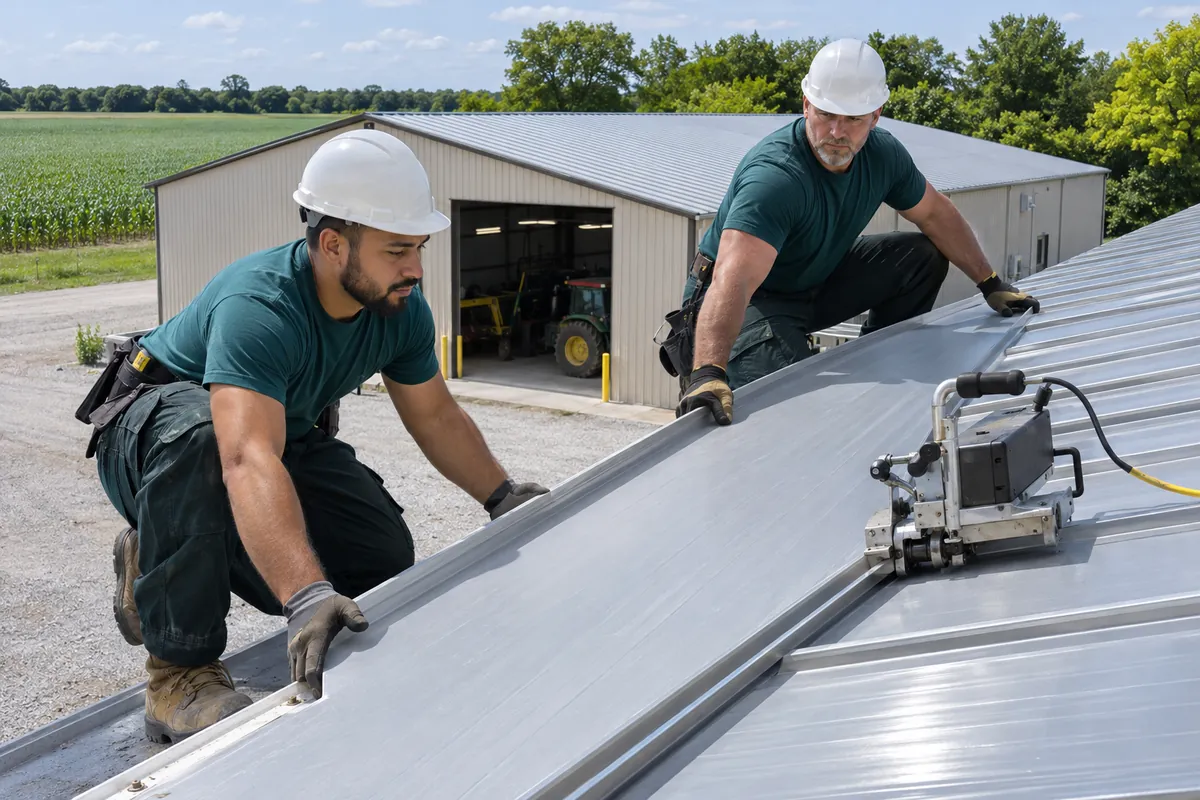
Panels on purlins for shops, warehouses, and farm buildings with sloped steel framing.
Commercial metal roofing in NoblesvilleChoose a question to read the answer. These come from owners weighing TPO for their own buildings.
TPO is a single-ply thermoplastic sheet, most often white, laid over insulation on low-slope roofs. Around Noblesville it is either mechanically fastened or fully adhered, and hot air welds the laps so they fuse into one piece. The light surface reflects sun, which cuts summer heat gain through the roof.
A TPO roof gives you a reflective white surface with welded seams, and EPDM gives a tough rubber surface with taped or adhered seams.
Buildings chasing a cooler roof surface lean toward TPO; roofs with heavy foot traffic or odd shapes lean toward EPDM. With either one, curb and parapet detailing decides how well it holds up.
Long runs get a robotic hot-air welder, and corners and details get a hand welder. The heat melts the top and bottom sheets into each other. We test-weld every morning to set heat and speed for the weather, then probe each seam once it cools.
Roof area and membrane thickness come first. Insulation type and thickness, tear-off of old layers, fastened or adhered attachment, and the count of curbs, drains, and penetrations all add to it. Edge metal and parapet height play in as well. We set the number after a free on-site estimate.
Yes, with adjustments. Welding heat and speed come from test welds made at that day's temperature, and adhered systems wait for the adhesive temperatures the manufacturer lists. On cold days we lean on mechanically fastened sheet and keep insulation under tarps until it is covered.
Sometimes. If core cuts show one existing roof with dry insulation, a cover board and new TPO can go over it, and local rules on roof layers apply. Two layers already in place, or wet board over large areas, means tear-off comes first.
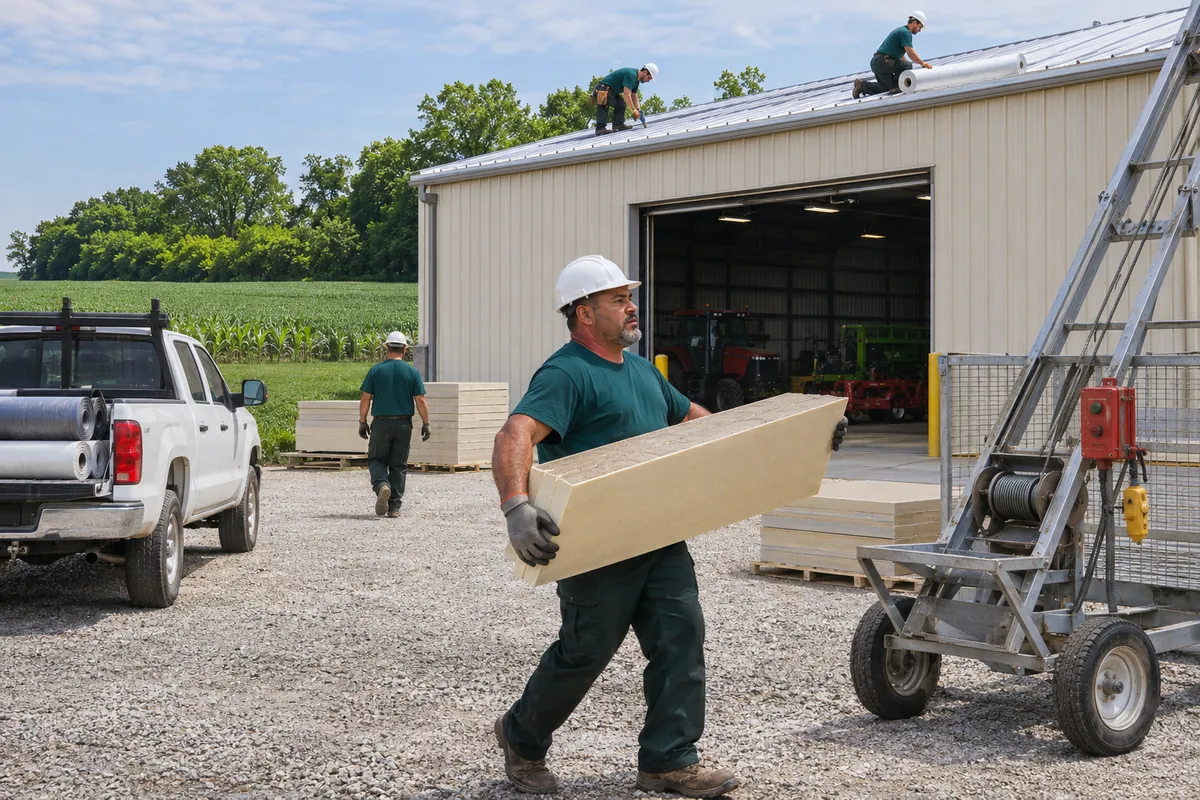
Send the building address and roof details. We core the roof, check the drains, and write a TPO scope with the price tied to each part.