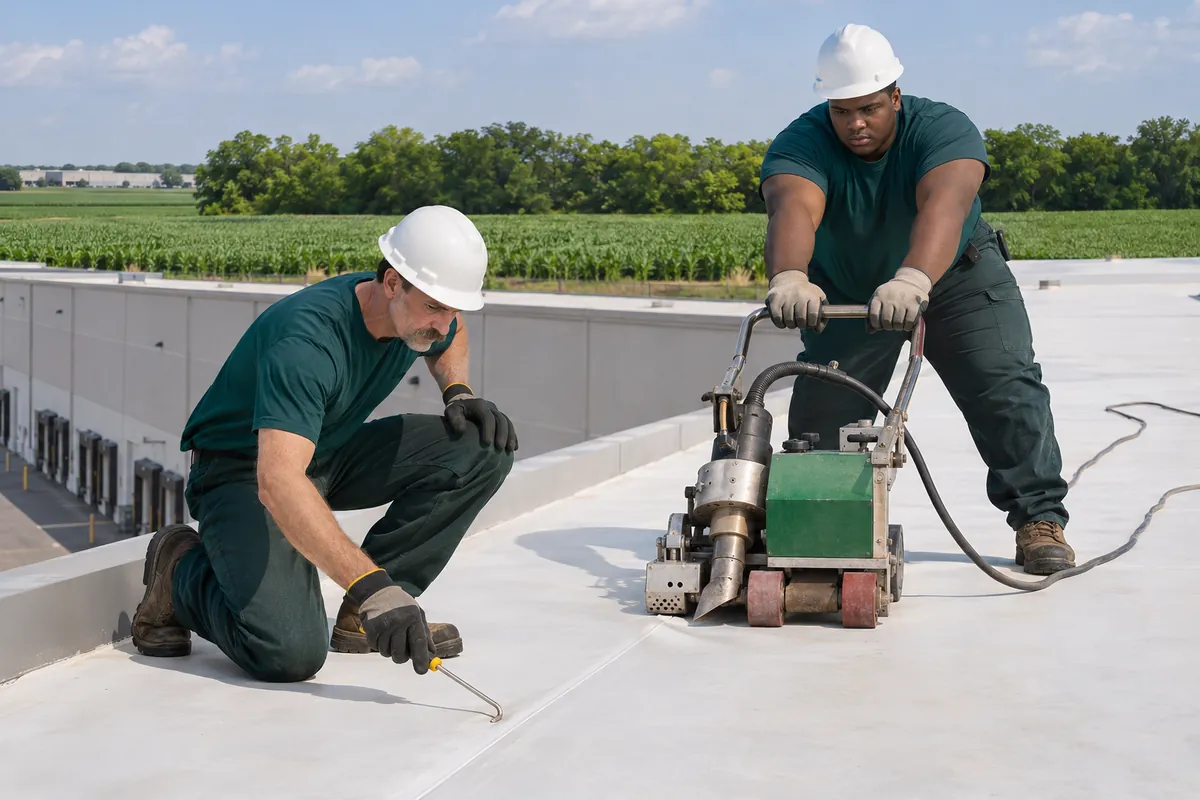
TPO Roofing
Welded white membrane for plant roofs with high cooling loads and long open runs.
TPO roofing in Noblesville
Noblesville industrial roofing covers plant and warehouse roofs with exhaust fans, ductwork, and heavy foot traffic, rebuilt in sections so production keeps running below.
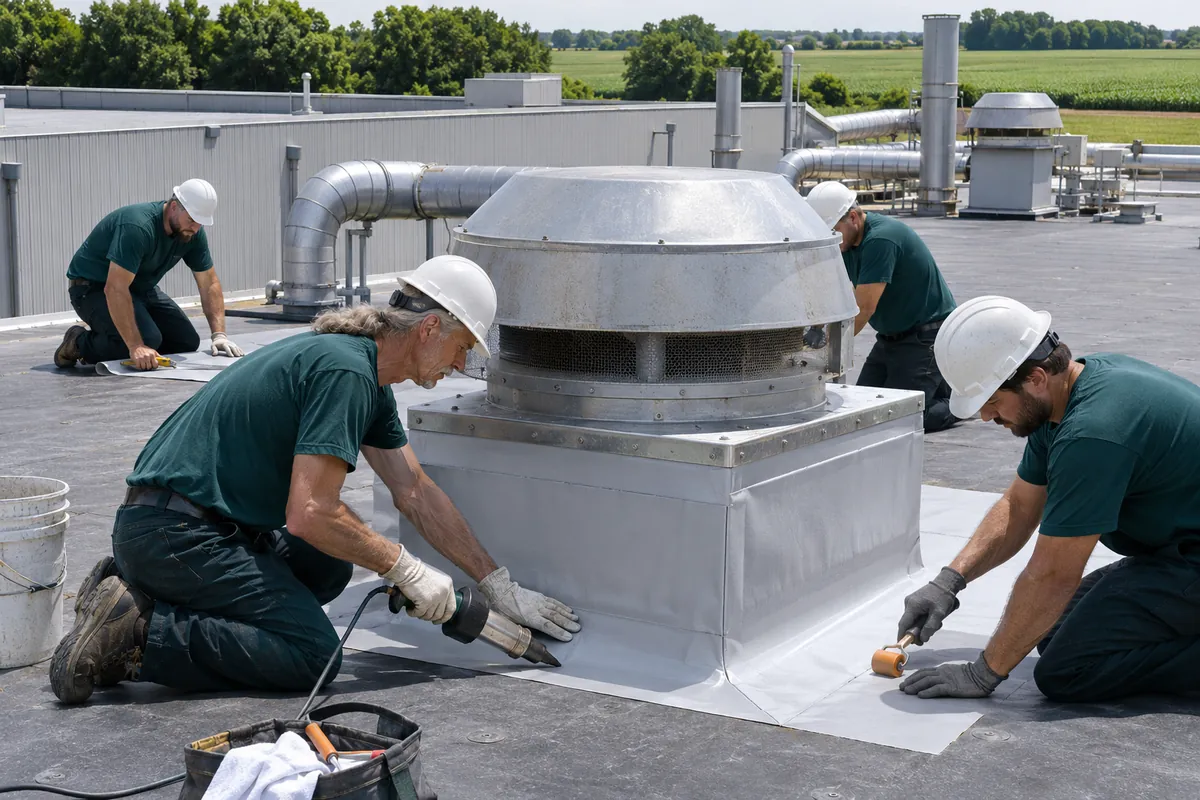
Noblesville industrial roofing starts with what happens under the roof. These lists show what lets a plant reroof move quickly and what we settle before tear-off.
Plant roofs wear in their own pattern, around exhaust, traffic paths, and equipment. These pairs match what people below notice with what we find above.
Water landing on machines usually starts at a curb or duct penetration, then runs along the deck flutes before it drops.
Heat and vibration from fans split flashing at curb corners, the most common way water gets into a plant roof.
Dark staining on the ceiling near a fan shows grease or process vapor settling on the roof and seeping through.
Membrane near exhaust outlets turns soft or blistered where oils and chemicals attack it, and that area needs a resistant sheet.
Drips on cold mornings sometimes come from wet insulation or missing vapor control, and a core cut tells the two apart.
Wide plant roofs with long runs to drains collect water in low bays where the deck sags between joists.
Leaks that appear after maintenance calls point to paths worn into the roof by technicians walking to units.
Scuffed lanes between hatches and units show where walkway pads belong on the new roof.
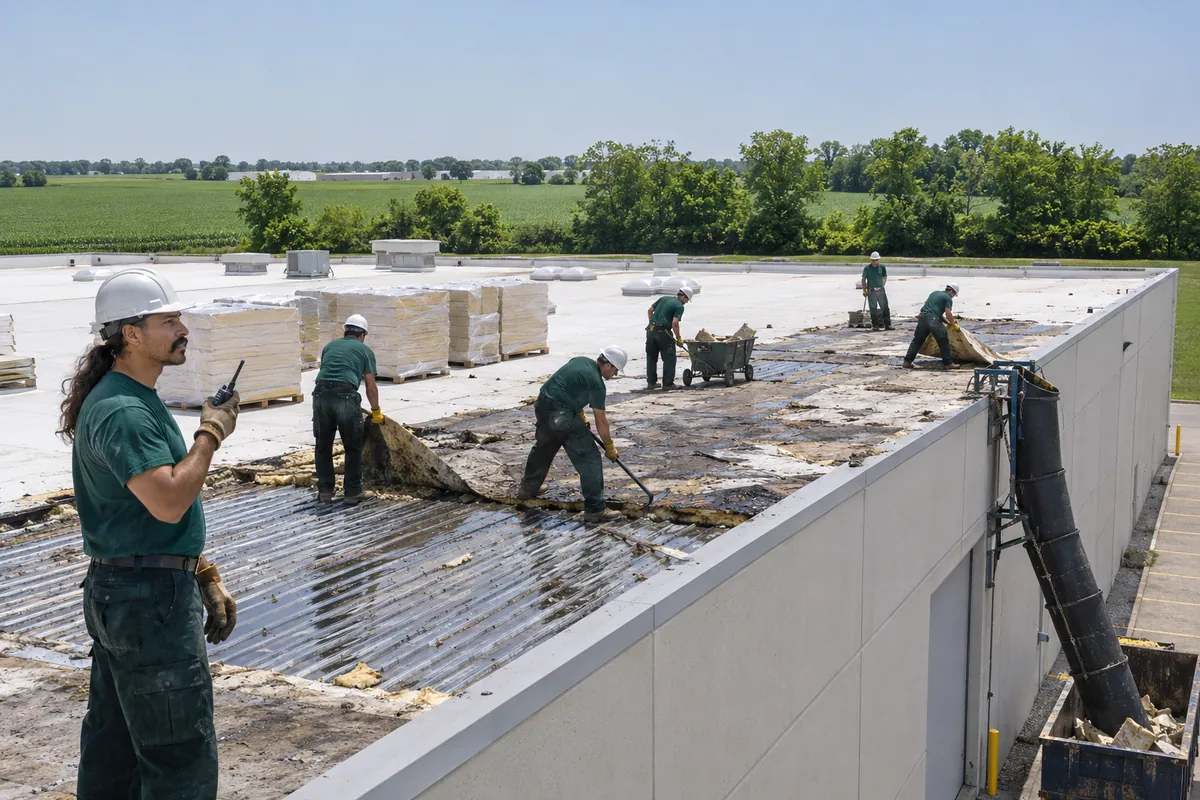
Large plant roofs are rebuilt one bay at a time. We open only the area that can be insulated and sealed before the end of the day, so nothing sits open over production overnight.
Interior protection goes up where tear-off sits over equipment, and debris goes down a chute to a dumpster placed away from forklift lanes.
Send the address and your shift pattern. We walk the roof with maintenance staff, core it, and map every fan and curb before writing the phasing plan.
Get A Free EstimateMany plant roofs carry a mix of good and failing areas. The table shows when we repair in sections and when the whole roof is due.
| Roof Factor | Repair By Section | Full Reroof |
|---|---|---|
| Leak Spread | Leaks around a few curbs | Leaks across many bays |
| Insulation | Wet board limited to a few areas | Saturated board across large sections |
| Membrane Or Metal | Holding outside the problem areas | Failed beyond repair over most of the roof |
| Deck | Firm under the wet spots | Rusting or breaking down |
| Production | Short work windows around shifts | Phased replacement planned with plant managers |
Multi-tenant parks add a twist, because each tenant keeps its own hours. This is the order we follow so every space stays dry and running.
We core each bay, mark existing layers and wet areas, and map fans, curbs, and drains on a roof plan.
Tenants and plant managers see which sections close when, and noisy tear-off lands outside their busiest hours.
Covers go over equipment below, then one section at a time comes off down to the deck for inspection.
Tapered insulation, cover board, and membrane go down, and curbs get new flashings tied into the field sheet.
Seams are probed, drains get new clamp rings, and the bay is walked with the tenant before the next one opens.
Industrial jobs use TPO, EPDM, or metal, and each one has its own page with the details.
Welded white membrane for plant roofs with high cooling loads and long open runs.
TPO roofing in Noblesville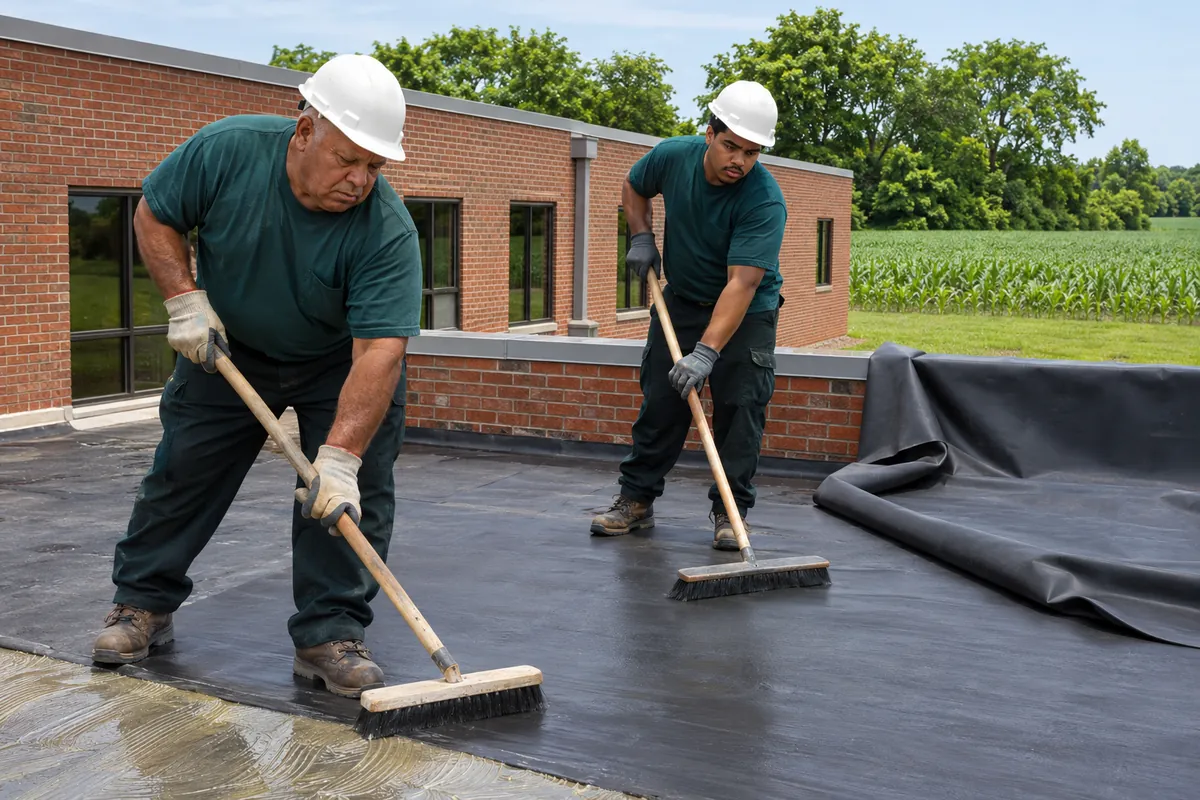
Taped rubber sheet that handles cold, hail, and the foot traffic of maintenance routes.
EPDM roofing in Noblesville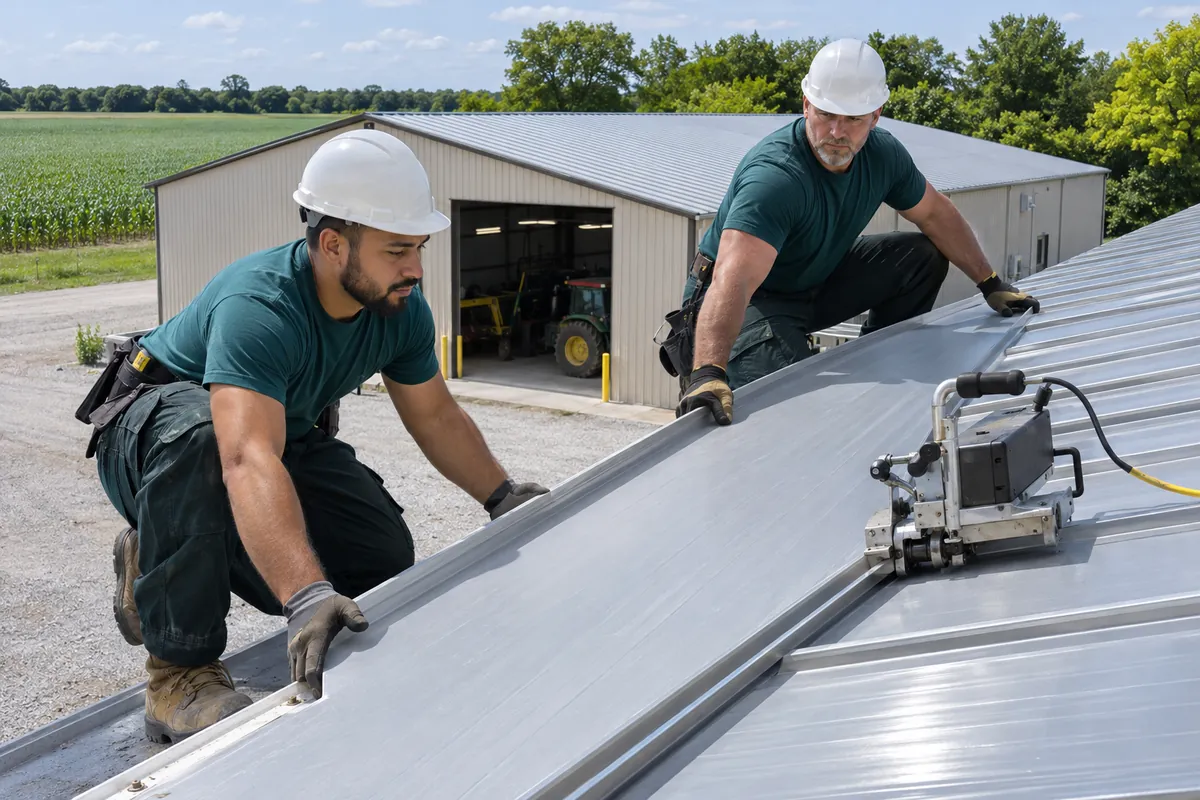
Standing-seam panels for steel-framed warehouses and sloped industrial buildings.
Commercial metal roofing in NoblesvilleThese come up whenever plant and facility managers plan a reroof. Choose one to read the answer.
Industrial roofing means the roof systems on plants, warehouses, and processing buildings. Around Noblesville that is mostly large TPO, EPDM, or metal roofs built to carry rooftop equipment, exhaust, and foot traffic. Every job is planned around safety rules, shift schedules, and what sits below the roof.
Replacement is due once leaks are widespread, insulation is soaked across big sections, the membrane or metal has failed past repair, or the deck is breaking down. We phase the work by section so production continues, and equipment under each work area gets covered first.
Ask whether they work on large commercial systems, how they plan around production and safety rules, how they protect equipment below, and whether the scope comes in writing. Then ask about exhaust fans, chemical exposure, and rooftop units. We install TPO, EPDM, and metal on industrial buildings and answer each of those in the estimate.
Area, system type, insulation, tear-off, deck repair, and the count of curbs and penetrations set most of it. Chemical-resistant details at exhaust, safety requirements, and phasing around shifts add to the number. A free on-site estimate puts a price on your roof.
Know what is under the current roof, whether the deck needs work, and how tenants will keep operating. We core the roof to see the layers and insulation, check every drain, and set sections so each tenant space stays dry while its part of the roof is done.
Yes, when the system and weather allow it. Mechanically fastened membrane handles cold better than adhesives, and test welds set the heat for the day. Shutdown weeks suit work over sensitive equipment, so we plan those sections first.
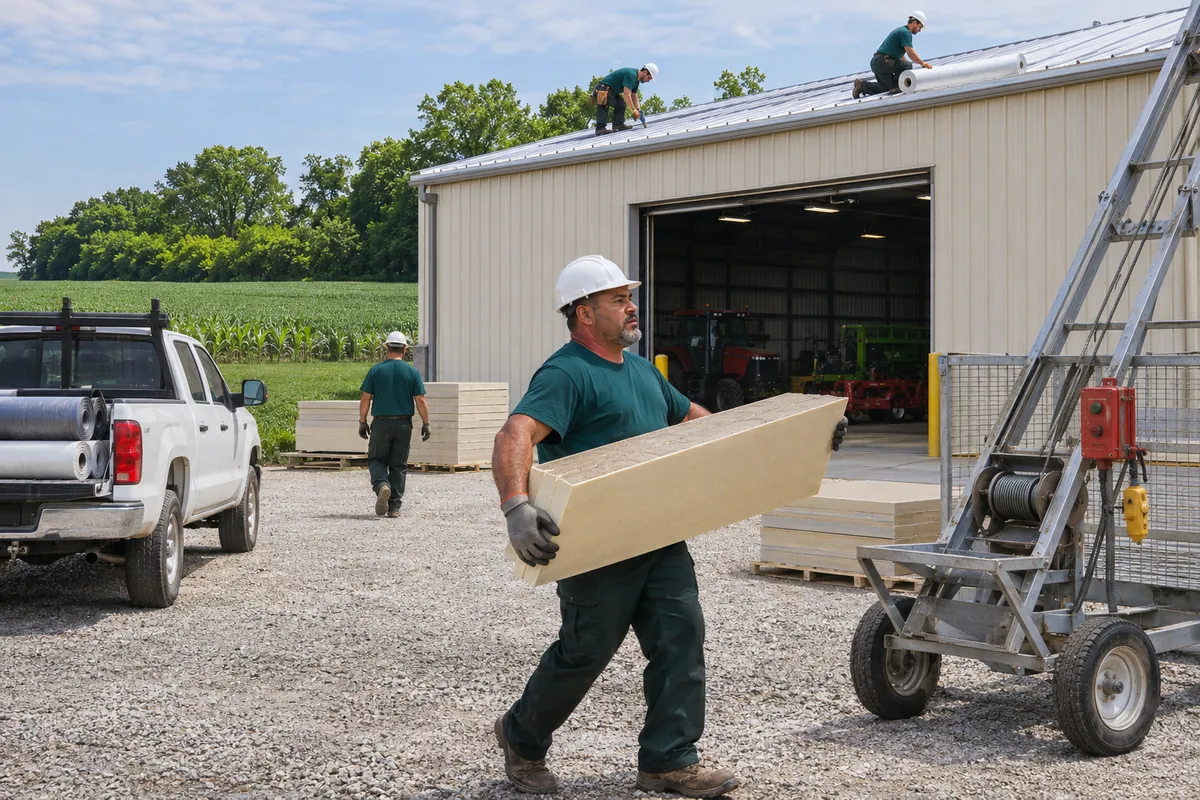
Share the plant address and shift pattern. We map the roof, core each bay, and write a phased scope that keeps production running.